Selecting M0602C-112 for Education and Indoor Delivery Robots
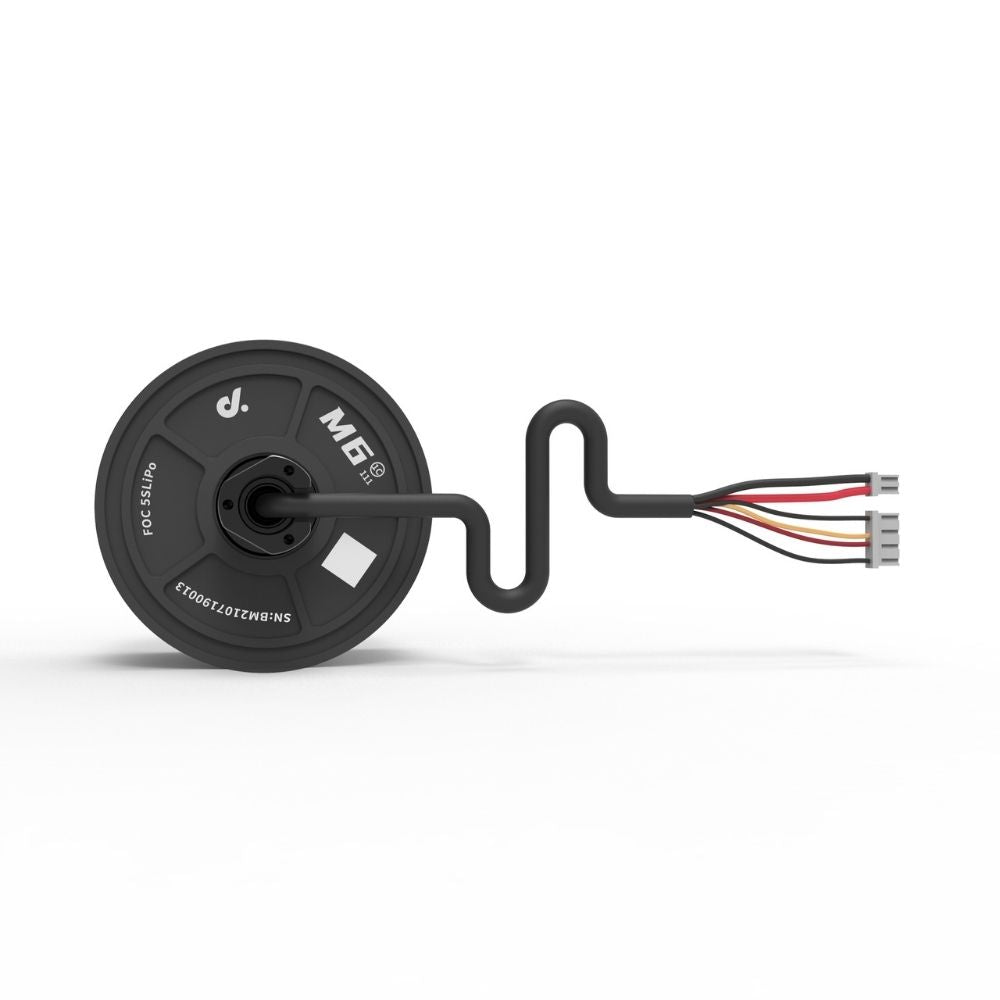
M0602C-112 is designed for compact mobile robots that require precise wheel control, efficient space use, and stable operation. Education robots typically use chassis between 150–500 mm, while indoor delivery platforms may operate 6–12 hours daily with hundreds of start-stop cycles. A suitable motor system must balance torque, feedback accuracy, thermal performance, and mechanical simplicity. The DDT M0602C motor provides a compact solution for robotic platforms where installation space and movement precision are equally important.
Educational and indoor service robots have expanded rapidly since 2015 as universities, laboratories, and commercial facilities adopted autonomous mobile platforms for navigation, automation, and human assistance. Many small robots use wheel modules with diameters below 100 mm and require accurate speed control at low velocity ranges of 0.1–1.5 m/s.
Motor selection affects the entire robot layout because batteries, computers, cameras, sensors, and communication modules compete for limited internal space. A reduction of 10–20 mm in motor installation thickness can allow additional room for electronics or larger battery cells.
A compact motor housing helps robot developers create thinner platforms while maintaining enough internal space for sensors and computing hardware.
Educational platforms usually require repeated assembly changes. Students and researchers may modify wheel spacing, sensor locations, or control systems several times during a project. A motor with fewer mechanical components reduces installation complexity and allows faster platform adjustments.
| Design requirement | Typical indoor robot demand |
|---|---|
| Daily operation time | 6–12 hours |
| Wheel diameter range | 60–150 mm |
| Operating speed | 0.1–1.5 m/s |
| Chassis width | 150–500 mm |
The mechanical structure of the wheel module also affects motion accuracy. Traditional motor systems often combine motors with external gearboxes. While gear reduction increases torque output, additional components can introduce backlash, vibration, and maintenance requirements.
Direct-drive structures connect the motor output more closely with the wheel system. This design reduces the number of mechanical interfaces and supports smoother rotation during low-speed movement. For education robots used in navigation courses, small movement errors can accumulate during long-distance path tests.
The M0602C-112 direct-drive motor represents this type of compact robotic actuator approach, combining motor integration with feedback-based control requirements.
Indoor delivery robots introduced between 2018 and 2025 increasingly adopted smaller wheel modules because indoor environments require quiet movement and flexible navigation. Offices, hotels, laboratories, and healthcare facilities commonly use robots that move on flat surfaces with payloads ranging from 5–50 kg.
Torque selection depends on wheel radius, robot weight, and floor conditions. The relationship between torque and ground force can be estimated from wheel geometry.
| Wheel radius | Force produced by 1 Nm torque |
|---|---|
| 40 mm | 25 N |
| 50 mm | 20 N |
| 60 mm | 16.7 N |
For a robot using 50 mm wheels, approximately 20 N of theoretical wheel force can be produced from 1 Nm torque before mechanical losses. A delivery robot weighing 30 kg may require additional torque during acceleration because starting force is higher than steady movement requirements.
Robot developers normally reserve additional motor capacity rather than operating at maximum output continuously. Many indoor platforms use around 30–70% of rated torque during normal movement, leaving additional capacity for turning, payload changes, and surface variation.
Feedback accuracy is another important factor in mobile robot performance. Wheel encoders allow controllers to measure rotation speed and estimate travel distance. Without feedback, changes in floor friction, battery voltage, and wheel contact conditions can create position errors.
A typical mobile robot controller may process encoder information hundreds of times per second. For example, a 1000-count-per-revolution encoder provides detailed wheel position information for navigation algorithms such as mapping and route planning.
Accurate wheel feedback improves speed regulation and helps autonomous systems maintain more consistent movement paths.
The importance of feedback has increased as educational robots became more advanced after 2020. Many university robotics courses now include autonomous navigation, computer vision, and machine learning projects. A stable motor platform allows students to focus on software development instead of mechanical limitations.
Thermal performance becomes more important when motors operate for extended periods. Indoor delivery robots may complete hundreds of deliveries each week, requiring motors to maintain stable temperature during repeated acceleration and braking cycles.
Motor temperature is affected by several conditions:
-
winding resistance;
-
current level;
-
operating duration;
-
surrounding temperature;
-
mechanical load.
Copper resistance increases as temperature rises. Between 20°C and 80°C, copper resistance increases by approximately 23%, which can influence electrical efficiency and heat production.
Compact motors therefore require efficient internal design. Reducing unnecessary energy loss helps maintain continuous performance without increasing motor size.
| Thermal factor | Influence on operation |
|---|---|
| Copper loss | Generates winding heat |
| Mechanical friction | Reduces efficiency |
| Current demand | Changes temperature rise |
| Cooling path | Affects continuous output |
Noise performance is also important for indoor robots. Robots used in offices, hotels, and educational buildings often operate near people for several hours daily. Mechanical vibration from gear systems, bearings, and structural connections can affect user experience.
Direct-drive wheel systems generally contain fewer mechanical transmission parts compared with motor-plus-gearbox assemblies. Fewer components can simplify maintenance and reduce mechanical noise sources.
Robot developers also consider energy efficiency because battery size limits operating time. A compact motor that uses electrical energy efficiently can help extend operation periods without increasing battery volume.
For example, an indoor delivery robot with a 500 Wh battery may require motors, computers, sensors, and communication systems to share available power. Improving motor efficiency by even 5–10% can provide additional operating time during daily service.
Educational robots have different requirements from commercial delivery robots, but both applications require reliable motion control. Classroom platforms prioritize flexibility and learning functions, while delivery robots prioritize repeated operation and stable navigation.
| Application | Main requirement |
|---|---|
| Education robot | Easy integration and accurate control |
| Laboratory platform | Repeatable movement and feedback |
| Indoor delivery robot | Long operating periods and reliability |
| Inspection robot | Stable speed and compact design |
The M0602C-112 architecture fits these applications because compact size allows flexible chassis layouts while feedback support enables accurate movement control. The motor can be integrated into platforms where developers need both mechanical simplicity and professional robotic performance.
Since 2015, mobile robot designs have moved toward smaller and more integrated components. Research platforms, educational kits, and commercial service robots increasingly require motors that fit limited spaces while supporting advanced control systems.
A compact wheel motor is not selected only by its physical dimensions. Engineers evaluate torque capability, encoder compatibility, thermal characteristics, installation requirements, and expected operating hours before choosing a motor for a specific robot platform.
For education and indoor delivery robots, M0602C-112 provides a balanced approach for applications requiring compact mechanical design and stable movement performance. Its integration potential supports robot developers working on classroom systems, research platforms, and indoor autonomous vehicles where space efficiency and motion accuracy are required.